
June 9, 2020
Recovery
How to Restore Replaced or Overwritten Files on Mac (2026)
Accidentally saved over a file on Mac and need to get the original back? See also how to recover lost Word documents on Mac. Unlike Windows, macOS doesn’t have a built-in “Restore previous versions” button — but there are several ways to recover overwritten or replaced files in 2026, depending on how your Mac is set up.
Method 1: Undo (If Still in the Same Session)
If you just saved over the file in the same app session, try:
- Press Cmd+Z repeatedly to undo changes back to the previous state
- In many apps (Pages, Word, Photoshop, TextEdit) undo history persists even after saving as long as you haven’t closed the app
If you closed and reopened the app after saving, undo is no longer available and you need another method.
Method 2: Time Machine Backup
If you have Time Machine set up with an external drive, you can restore any previous version of a file:
- Connect your Time Machine backup drive
- Open the Finder and navigate to the folder containing the overwritten file
- Click the Time Machine icon in the menu bar → Enter Time Machine
- Use the timeline on the right to go back to before the file was overwritten
- Select the file and click Restore
Time Machine takes hourly snapshots locally and backs up to external drives. If your Mac has Apple Silicon or a T2 chip, local snapshots may be stored even without an external drive — check Time Machine preferences.
Method 3: Revert to Saved (Pages, Word, TextEdit)
macOS apps that support Auto Save and Versions can restore previous states:
- With the file open, go to File → Revert To → Browse All Versions
- A Time Machine-style interface opens showing previous saves of that specific file
- Browse through older versions using the timeline
- Click Restore on the version you want
This works in Apple apps (Pages, Numbers, Keynote, TextEdit) and Microsoft Office apps on Mac. It does NOT work in Adobe apps or apps that save in their own format outside the macOS Versions system.
Method 4: Check iCloud Drive Version History
If the file was stored in iCloud Drive, previous versions may be available:
- Go to icloud.com on a browser and sign in
- Open iCloud Drive
- Find the folder containing the file
- Click the clock icon or look for “Restore files” in account settings
- iCloud keeps deleted and overwritten files for up to 30 days
Method 5: Use Data Recovery Software
If no backup exists, data recovery software can sometimes recover overwritten file content from disk sectors:
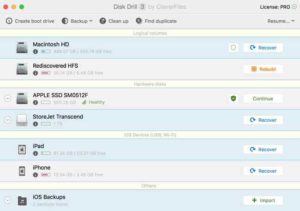
- Disk Drill — free scan, paid recovery. One of the best Mac data recovery tools in 2026. Recovers 400+ file formats.
- Stellar Data Recovery for Mac — professional-grade tool, supports APFS and HFS+ volumes
Important: Stop using the Mac immediately after realising the file was overwritten. Writing new data to the disk overwrites the sectors where the old file may still exist, making recovery harder. Run recovery software as soon as possible and do not install it onto the same drive you’re trying to recover from.
Method 6: Check AutoSave in Microsoft Office
If the file was a Word, Excel, or PowerPoint document with AutoSave enabled (stored in OneDrive or SharePoint):
- Open the document in Word/Excel/PowerPoint
- Click File → Info → Version History
- Previous auto-saved versions are listed with timestamps
- Click any version to open and restore it
Recovery Method Summary
| Method | Works If | Cost |
|---|---|---|
| Undo (Cmd+Z) | Same session, app still open | Free |
| Time Machine | Had backup drive connected | Free |
| File → Revert To | Apple/Office app with Versions | Free |
| iCloud Drive history | File was in iCloud Drive | Free |
| Disk Drill | No backup — last resort | Paid recovery |
| Office Version History | OneDrive/SharePoint file | Free |
Frequently Asked Questions
Can you recover a replaced file on Mac without Time Machine?
Yes — try File → Revert To → Browse All Versions in the app (works in Pages, TextEdit, Word with OneDrive). Check iCloud Drive version history at icloud.com. As a last resort, use Disk Drill for data recovery. Without any backup, recovery is not guaranteed but often possible.
How do I set up Time Machine to prevent this in future?
Connect an external hard drive to your Mac. Go to System Settings → General → Time Machine → Add Backup Disk → select your drive. Time Machine automatically backs up hourly, daily, and weekly. A 1–2TB external drive costs –70 and is the most reliable Mac backup solution.
Does Mac automatically save previous versions of files?
Yes — for documents in Apple apps (Pages, Numbers, Keynote, TextEdit) macOS stores versions automatically using the Versions system, accessible via File → Revert To → Browse All Versions. Microsoft Office files stored in OneDrive also have automatic version history. Files in other apps or saved locally without Time Machine do not have automatic version history.
FAQ
How do I restore a file I accidentally saved over on Mac? Check Time Machine first — open the folder containing the file, enter Time Machine, and browse to a version before the overwrite. Also check iCloud Drive’s version history and the app’s own auto-save history if it supports it.
Does macOS have a built-in undo for overwriting files? Not a direct “undo overwrite” feature, but Time Machine, iCloud Drive version history, and some apps’ auto-save keep previous versions. The key is having had a backup running before the incident.
Can I recover an overwritten file without Time Machine? If you have iCloud Drive sync enabled, check version history there. Some apps (Pages, Numbers, Word, Photoshop) keep their own auto-save histories independent of Time Machine.
Will a file recovery tool help with overwritten files? Unlikely — recovery tools find deleted files in free disk space, but an overwritten file replaces the original data directly. Time Machine or app-level version history is the only reliable route for overwrites.
How do I prevent losing overwritten files in the future? Enable Time Machine with an external drive or Time Capsule, ensure iCloud Drive sync is on for important folders, and use apps with auto-save and version history. Regular backups are the only reliable protection.
- January 15, 2013


Bilal Ahmad
Founder & Editor, TechMaish
Bilal Ahmad is the founder and editor of TechMaish, writing about consumer technology since 2008. For over 18 years he has covered streaming and downloads, games, social media platforms, iPhone and Android, Windows fixes and everyday software, testing tools hands-on and sharing what actually works. He is based in Peshawar, Pakistan.
About MeAll My ArticlesTwitterFacebookLinkedInInstagramPinterest