
October 3, 2010
Windows
Filmora vs Free Video Editors in 2026 (Movie Maker Is Gone — Now What?)
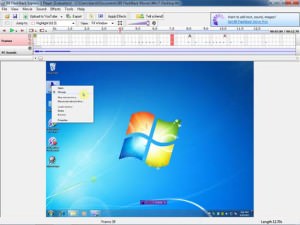
This comparison made sense in 2013: Wondershare’s editor versus Windows Movie Maker, the free default everyone had. Movie Maker was discontinued in 2017 — so the modern version of the question is: what replaced Movie Maker, and is Wondershare Filmora worth paying for against today’s free editors? Honest answers below.
What Happened to Windows Movie Maker
Microsoft killed Movie Maker with the Essentials suite in January 2017. Windows now ships Clipchamp as the built-in editor — web-based, sign-in required, with a free tier covering basic cuts, text and 1080p export. Warning worth repeating in 2026: sites offering “Windows Movie Maker downloads” are a long-running malware/scamware scheme. Do not install them.
Wondershare Filmora Today
Wondershare Video Editor grew into Filmora, now a mature mid-tier editor whose pitch is “90% of premium features at 20% of the learning curve.” Recent versions lean heavily into AI: text-based editing (cut video by editing its transcript), AI masking and background removal, auto beat-sync, smart cutouts, and template-driven effects packs. Pricing runs roughly $50–80/year (or a higher perpetual license), with AI credits metered on heavier features. The free version watermarks exports — treat it as a trial.
Filmora’s real position: faster to competence than professional tools, more capable than built-ins, ideal for YouTube/social creators who value speed over granular control.
We have also covered nine online video converters compared in a separate walkthrough.
The Competition Filmora Actually Faces in 2026
DaVinci Resolve (Free) — The Elephant in the Room
The most important fact in this category: Resolve gives away a genuinely professional editor — Hollywood-grade color tools, Fairlight audio, capable AI features — for free, no watermark. The cost is a steeper learning curve and heavier hardware appetite. Anyone willing to invest two weekends of learning gets more editor than Filmora sells.
CapCut — The Social-Video Default
Free-tier friendly, template-driven, auto-captions, effortless vertical video — the fastest route from phone clip to TikTok/Reel/Short, on desktop too. Increasingly the paywall creeps over pro features, but for social-first creators it replaced Movie Maker’s role as “the editor everyone just has.”
Clipchamp — The Built-In Baseline
For trimming a screen recording or making a quick family video, it is already on your PC and does the job. Outgrow it and you will know.
So: Who Should Pay for Filmora?
- Choose Filmora if you edit weekly for YouTube/clients, want AI shortcuts and polished templates, and value your time above the subscription — it hits the effort-to-output sweet spot.
- Choose Resolve if you are willing to learn properly and want a no-ceiling free tool — the objectively strongest value in video editing.
- Choose CapCut if your output is shorts/reels and speed is everything.
- Stay with Clipchamp if editing is an occasional chore, not a craft.
Hardware Reality Check
Any editor benefits from 16 GB RAM (32 GB for 4K), an SSD for footage, and a GPU for export acceleration — Filmora and CapCut run acceptably on modest laptops, Resolve punishes them. If your machine is old, that alone may decide the question.
If you find this useful, our guide on free DVD rippers worth using goes deeper.
FAQ
Is Filmora a one-time purchase? Both options exist: annual subscription or a pricier perpetual license — but AI features consume metered credits either way; check current terms before buying for the AI tools.
Can I still get Movie Maker legally? No official source exists. Unofficial downloads are a known malware vector — use Clipchamp or the free tools above instead.
Which is best for a complete beginner? CapCut for social video, Filmora for YouTube-style projects, Clipchamp for one-off basics. Start free; pay only when you hit a wall you can name.
For more on this topic, see videobyte dvd creator review: a reliable tool worthy of usage.

 January 6, 2022
 February 4, 2014


Bilal Ahmad
Founder & Editor, TechMaish
Bilal Ahmad is the founder and editor of TechMaish, writing about consumer technology since 2008. For over 18 years he has covered streaming and downloads, games, social media platforms, iPhone and Android, Windows fixes and everyday software, testing tools hands-on and sharing what actually works. He is based in Peshawar, Pakistan.
About MeAll My ArticlesTwitterFacebookLinkedInInstagramPinterest